
- A Market That’s Expanding and Changing Shape
- The Real Growth Isn’t in Big Cities Anymore
- From Selling Medicines to Building Relationships
- Technology Is Quietly Changing the Game
- Low Investment but Smarter Investment
- Government Support Will Keep Fueling Growth
- But Let’s Be Real It’s Not Effortless
- Where the Smart Players Will Win (2026–2030)
- A Note on Choosing the Right Partner
- Final Thoughts

If you had asked someone a decade ago whether small entrepreneurs could build a solid business in the pharmaceutical industry without owning a factory, the answer would probably have been not really.
But today, that’s exactly what thousands of people across India are doing and doing successfully.
The future of the pharma franchise business in India (2026–2030) is highly promising, driven by rising healthcare demand, increasing chronic diseases, and expansion in tier-2 and tier-3 cities. With strong government support, digital transformation, and a growing pharmaceutical market expected to reach $130 billion, the sector offers significant long-term growth and scalability.
- The Pharma Franchise (PCD – Propaganda Cum Distribution) model has quietly transformed from a side opportunity into a serious, scalable business model. And between 2026 and 2030, this space is not just growing it’s evolving.
Let’s break down what the future really looks like, beyond the usual high growth statements.
A Market That’s Expanding and Changing Shape
India’s pharmaceutical market is expected to touch $130 billion by 2030, but what matters more is how this growth is happening.
It’s no longer just about selling more medicines. The industry is shifting toward:
- Chronic care (diabetes, cardiac, thyroid)
- Preventive healthcare (nutraceuticals, wellness)
- Specialized therapies (derma, neuro, gynae)
This shift directly benefits pharma franchise businesses. Why?
Because distribution is becoming more localized and specialized, not centralized.
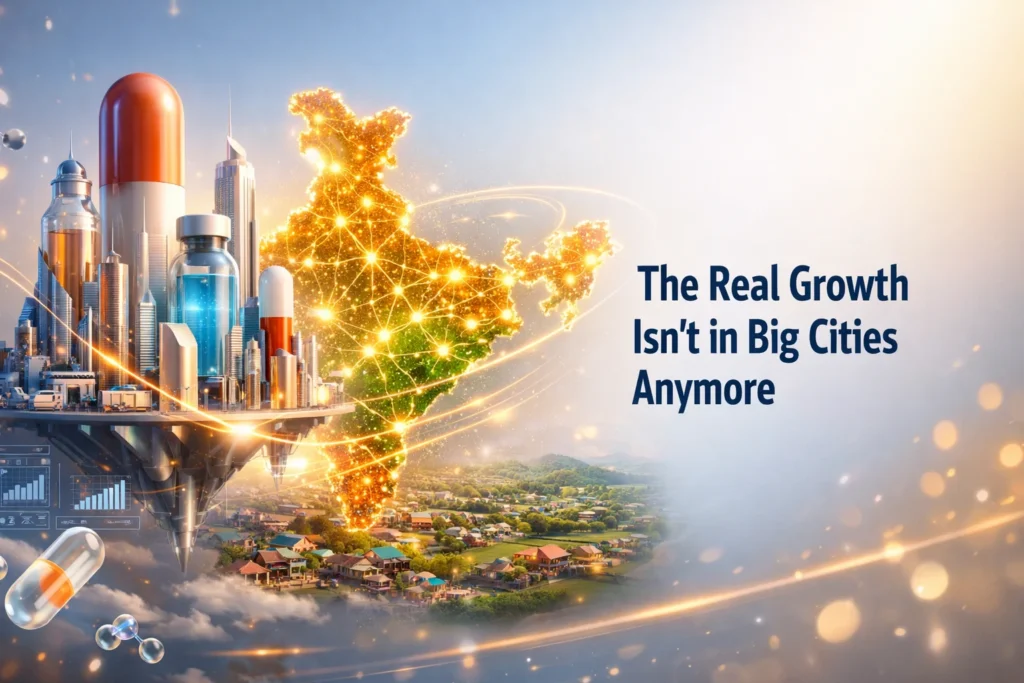
The Real Growth Isn’t in Big Cities Anymore
Metro cities are already saturated. The real opportunity lies in:
- Tier-2 cities
- Tier-3 towns
- Semi-rural areas
These regions are seeing:
- Better hospitals and clinics
- Increased health awareness
- Higher spending on medicines
From 2026 onwards, pharma franchise businesses that focus on untapped territories will grow faster than those competing in already crowded markets.
From Selling Medicines to Building Relationships
Earlier, success in pharma distribution was mostly about supply.
Now, it’s about trust and relationships.
A successful franchise partner today:
- Builds long-term connections with doctors
- Understands local demand patterns
- Focuses on consistent product availability
Between 2026–2030, this human element will matter even more than pricing or discounts.
Technology Is Quietly Changing the Game
The biggest shift that many people underestimate is technology.
Pharma franchise businesses are no longer run on registers and phone calls alone. Today, partners are using:
- Digital order systems
- CRM tools
- Inventory tracking apps
- WhatsApp-based communication with doctors and chemists
Even telemedicine is influencing demand patterns.
This means:
A small distributor can now operate with the efficiency of a much larger business
Decision-making is becoming data-driven, not guesswork-based
Low Investment but Smarter Investment
Yes, the pharma franchise model is still known for low entry cost, but the mindset is changing.
Earlier:
Start with minimum stock and try luck.
Now:
Start strategically, choose the right segment, and scale intelligently.
Typical trends you’ll see:
- Higher focus on chronic medicines (repeat demand)
- Growing interest in nutraceuticals (higher margins)
- Selective expansion instead of random product addition
The opportunity is still accessible but success now depends on how smartly you start, not just how cheaply.
Government Support Will Keep Fueling Growth
India’s healthcare push is not slowing down. Programs like:
- Ayushman Bharat
- Expansion of public healthcare infrastructure
- Support for generic medicines
are increasing the demand for affordable, quality drugs.
And every time a new hospital, clinic, or pharmacy opens in a smaller town, it creates demand for local distribution partners
That’s where pharma franchise businesses come in.
But Let’s Be Real It’s Not Effortless
Many blogs only talk about profits, but here’s the practical side:
You may face:
- Competition from multiple companies
- Pressure to maintain consistent supply
- Time needed to build doctor trust
- Market fluctuations in certain products
This is not a get rich quick business.
But it is a build it right, grow it steadily kind of business.

Where the Smart Players Will Win (2026–2030)
The next wave of successful pharma franchise businesses will:
- Focus on niche segments instead of everything
- Build strong local networks
- Use technology for efficiency
- Partner with reliable, experienced companies
And most importantly
They’ll treat this as a long-term business, not a short-term experiment.
A Note on Choosing the Right Partner
One decision that shapes everything is which company you partner with.
Working with an experienced and stable organization makes a huge difference especially when you’re just starting.
For example, Panmlabs India, established in 1993 by Naveen Jain, has built its presence over decades by focusing on:
- Consistent product quality
- Reliable supply chains
- Monopoly-based franchise opportunities
Having monopoly rights in your area can significantly reduce internal competition and help you grow with clarity and confidence.
But beyond any brand, the key is this:
Choose a company that supports your growth not just your first order.
Final Thoughts
The future of the pharma franchise business in India between 2026 and 2030 is not just bright it’s evolving.
This industry is moving toward:
- Smarter distribution
- Specialized products
- Tech enabled operations
- Deeper local penetration
For those willing to learn, adapt, and stay consistent,
this isn’t just a business opportunity it’s a chance to build something stable, scalable, and meaningful.
Because at the end of the day,
you’re not just selling products you’re becoming part of a system that delivers healthcare where it’s needed the most.